David Townley, Executive Director, ARC Hub for HealthTech, sets out what it really takes to create a successful healthtech business.

How to build a venture-grade healthtech business model? Throw rocks at it

David Townley. Photo:Andrew Downes, xposure
Home > How to build a venture-grade healthtech business model? Throw rocks at it

Helping founders find the weaknesses in their business plan early in the development process gives them the chance to adapt while they’ve still got the runway and helps turn more high-calibre healthtech research into venture-grade business models.

Ireland has world-leading academic laboratories, researchers, scientists and clinicians. It also has a highly developed medtech base, including a significant presence from leading global companies and Europe’s highest proportion of medtech professionals per capita in its workforce.

Yet, a critical gap remains: too much high-calibre research fails to progress into scalable products and companies capable of improving the lives of patients in Ireland and internationally. The ARC Hub for HealthTech exists to bridge that gap.

Breakthrough research needs a coherent route to become a commercial proposition in which customers, clinicians and investors can have confidence. The ARC Hub is not simply accelerating individual projects.

It is helping to build a repeatable innovation system for healthtech commercialisation and venture creation in Ireland. It is a disciplined, commercialisation environment, that takes market-level learnings and injects them into the academic lab, to accelerate translational research into venture-grade assets.

Venture-grade does not simply mean investor-friendly. It means a business proposition capable of withstanding scrutiny across clinical need, market opportunity, evidence generation, regulatory strategy, product claims, reimbursement, intellectual property, and commercial execution.
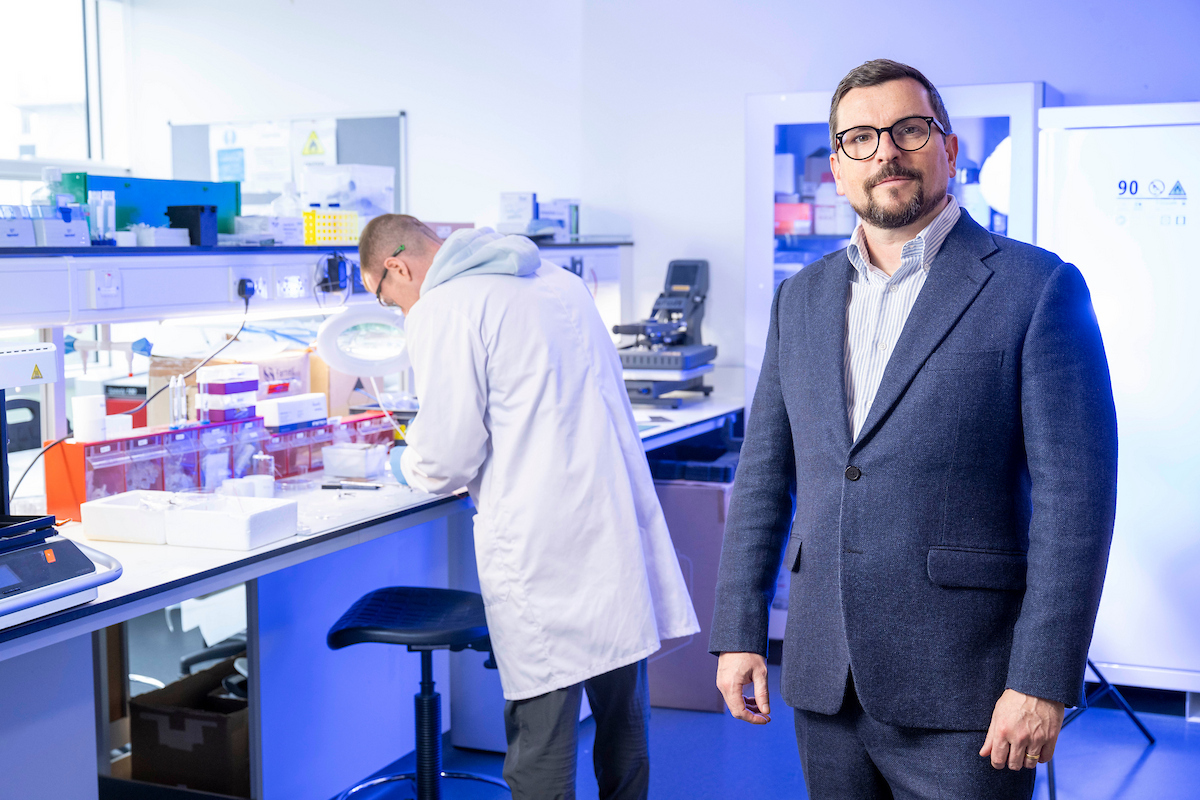
David Townley, Executive Director of the ARC Hub for HealthTech, in a laboratory with a researcher working at the bench
David Townley, Executive Director, ARC Hub for HealthTech, sets out what it really takes to build a successful healthtech business.

Throwing rocks at brilliant ideas

We want to help founders expose weaknesses in their business model early because, typically, those weaknesses are discovered too late. It can take founders years to recover from such missteps, if they manage to at all. Exposing weaknesses early gives founders the ability to respond. We work with them to convert initial ideas into a coherent business proposition capable of competing for early risk capitalisation.

To achieve this, the ARC Hub challenges a founder’s entire business model – we throw rocks at it. What’s the clinical need? Is the market viable and accessible? What evidence will be required and by whom? Is the solution differentiated and technically robust? Is there a viable regulatory route and what are the components of that route? What are the product claims? Is the IP defensible? Can the team execute? We question every aspect of the model.

The uncomfortable truth is that many healthtech projects spend years perfecting and polishing technology before fully validating their commercial reality. A strong device or platform is necessary, but it is not sufficient. Clinical, regulatory, evidence, intellectual-property and commercial strategies must be developed as one integrated proposition, not as separate workstreams.

A broad approach is important because we want to knit together the different strategies that are required, rather than leaving them siloed – or, absent – within the business plan. When this level of rigour is applied early in the development process, the output is a disproportionately more powerful and successful startup ecosystem.

To support the teams, we bring experienced, high-calibre entrepreneurs, executives, investors and specialist advisers into the process. Drawn from across the medical research ecosystem, they can jump in and get involved in projects, not just advise from the sidelines. Shared practical experience is a key benefit because it helps founders look around corners and be exposed to real-world dynamics long before their business is out in the market.

IP is your fortress

In a healthtech business, intellectual property (IP) cannot be treated as a cursory legal exercise. It is a strategic pillar of the business model and a central currency of inventiveness and defensibility. However, a handful of patents is not, on its own, a strong enough defence, and this is where a lot of founders go wrong.

We see success as creating higher quality business propositions that are highly competitive when seeking early risk capital. That means propositions which can compete for capital by bringing technical, clinical and commercial confidence. To achieve this, we work with founders to not only identify and protect their IP, but also develop a strategy to develop an intellectual-property portfolio aligned with product development, market positioning, and future value creation.

We want to challenge the norms of IP development in this space, because expectations need to be higher. A coherent IP strategy protects a business. One patent puts up a wall – but a coherent portfolio of patents, aligned with a product and commercial strategy, builds a fortress and a defensible company.

Venture grade is a high bar

Capital follows confidence. Medtech investors gain confidence when clinical, regulatory, reimbursement, evidence and intellectual-property strategies align around a coherent commercial proposition. A founder must be able to show not only why the technology works, but why a robust company can be built around it. You can only achieve this by being rigorous and honest in your assessment of where your business might fail. To get there, you need a lot of lenses on that plan.

Building a business model is an iterative process – throwing rocks at each version ensures the strongest version remains at the end. Becoming a venture grade investment asset is a high bar to reach, especially in healthtech. The businesses that go through this process are much higher-calibre as a result of that scrutiny.

Ireland already produces world-class healthtech research. The challenge is converting more of that research into investable spin-out companies and scalable products capable of delivering patient impact globally. That requires more than scientific excellence. It requires venture-grade thinking from day one.

The ARC Hub is hosted by University of Galway, in partnership with Atlantic Technological University and Royal College of Surgeons in Ireland (RCSI), and co-funded by the Government of Ireland and EU via the ERDF Northern & Western Regional Programme 2021-2027.